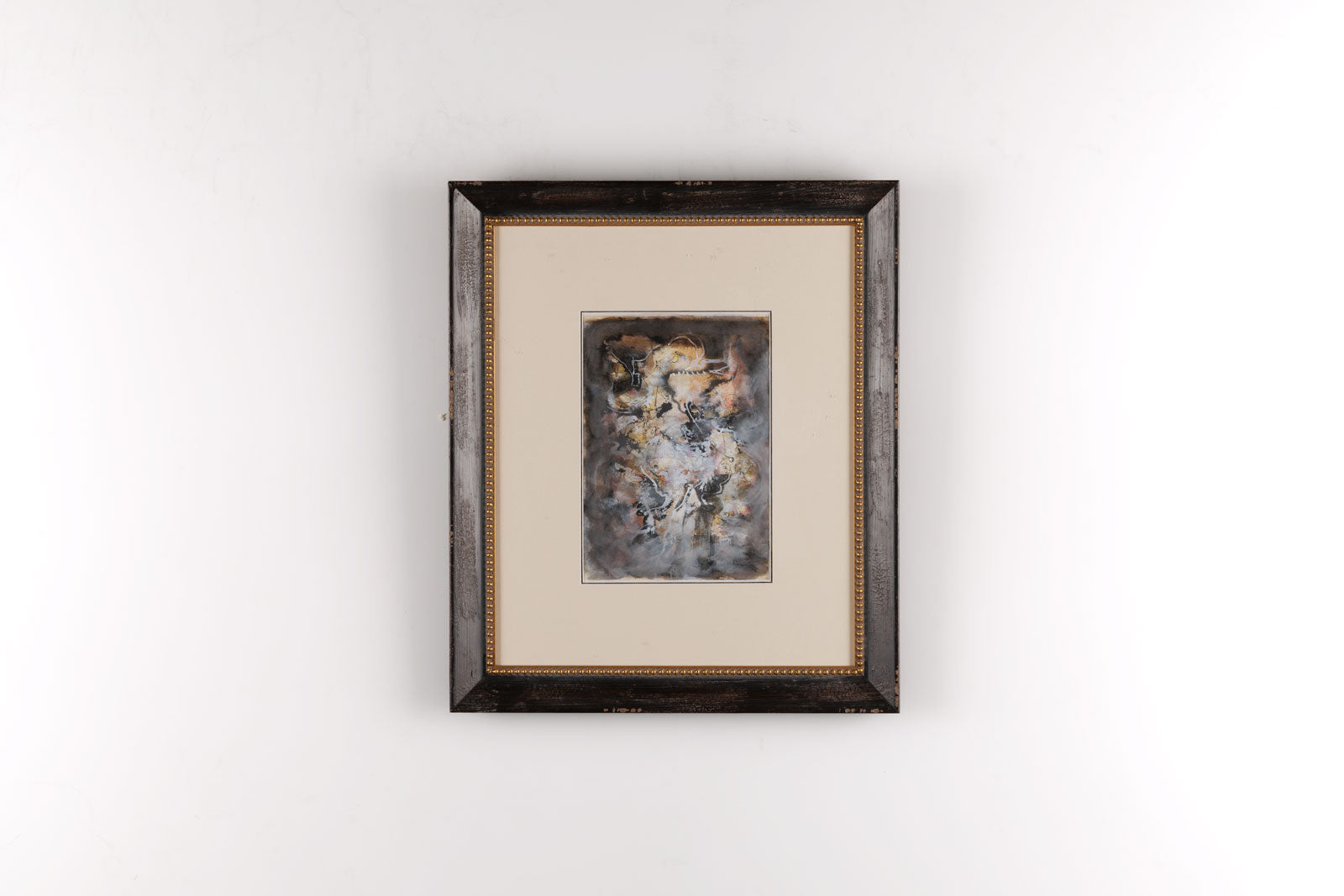
Léon Bellefleur
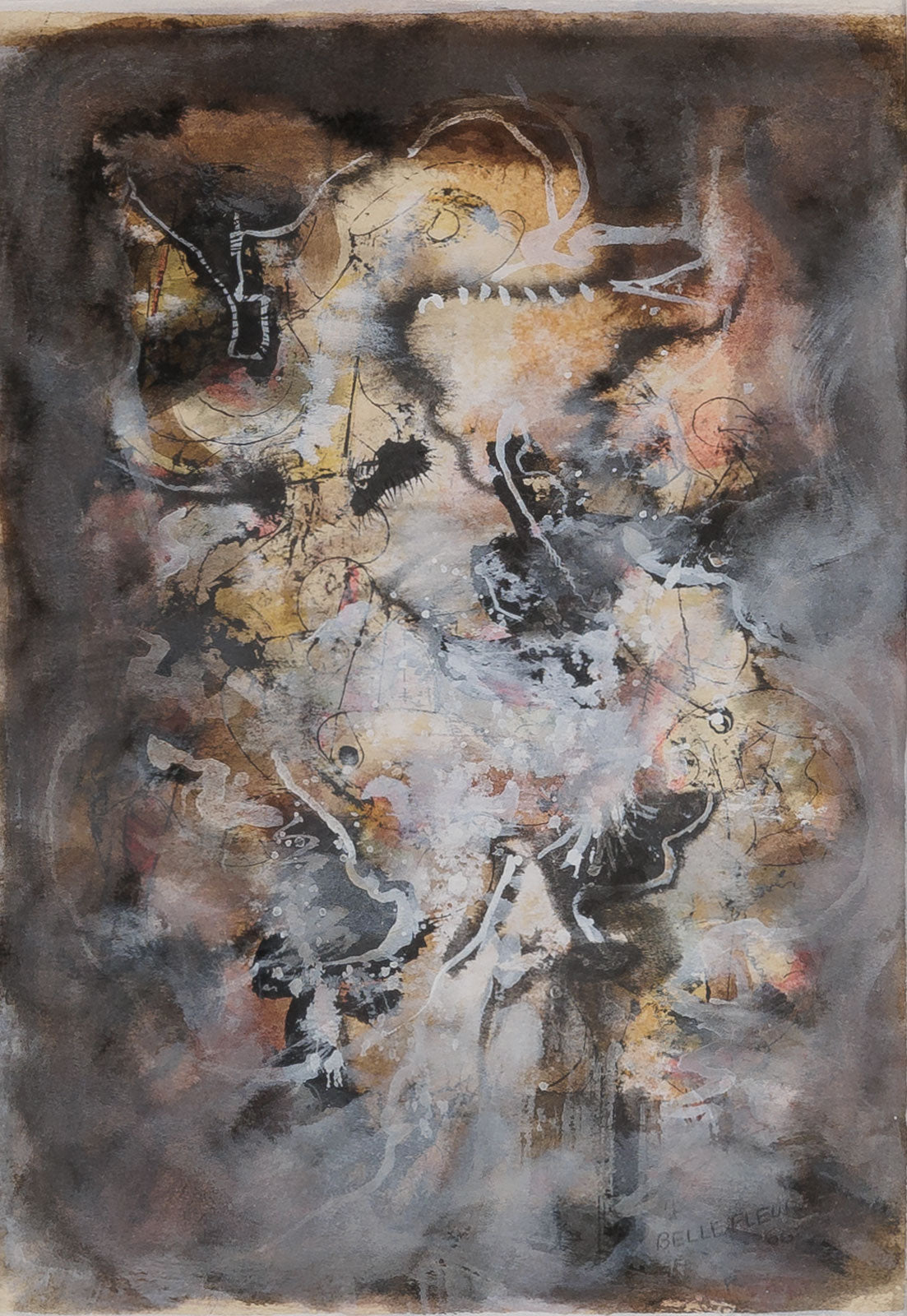
Léon Bellefleur (1910–2007) was a Montréal painter and engraver whose work helped shape the development of non-figurative art in Québec. Initially a teacher, he turned fully to painting in the 1940s, joining the Society of Contemporary Art and Alfred Pellan’s Prisme d’Yeux movement. Influenced by Surrealism and Automatism, his luminous, gestural abstractions combine dynamic colour with experimental engraving techniques refined in Paris. A recipient of Québec’s first Paul-Émile Borduas Award (1977) and member of the Royal Canadian Academy of Arts, his work is held in major collections across Canada and internationally.Léon Bellefleur is a Canadian painter and engraver, born in 1910 in Montréal. Under the conservative influences of his father who discouraged him from becoming a painter, the young Léon Bellefleur began his studies at the École normale de Montréal. At the age of 19, he became a teacher for the Commission des écoles catholiques de Montréal. Career that served as a livelihood for 20 years. Around 1933, Léon Bellefleur studied drawing lessons given by a professor at the École des Beaux-Arts in Montréal in the basement of a local primary school.
The return of Alfred Pellan to Québec in the early 1940s was a revelation for the artist Bellefleur. Modernity arrived in Québec and Bellefleur wanted to share it. He became a member of the Society of Contemporary Art from 1943 and partipate to 6 exhibitions. He then joined the Prisme d'Yeux movement directed by Alfred Pellan, signed their manifesto in 1948 and exhibited with the group. It is also thanks to this association that the artist discovered the interest of the surrealists for the unconscious as a source of inspiration. In 1950 Léon Bellefleur starred in his first major exhibition presented by the Art Association of Montréal. It was during these same years that he became friends with the artist Roland Giguère. in 1951, he won the first prize in modern painting at the 68th Spring Salon of the Montréal Museum of Fine Arts. Léon Bellefleur leaves for a few months for France between 1954 and 55 to
learn the engraving at the reputable address of Johnny Friedlander. On February 1, 1956, a group of thirty artists founded the Association of Non-Figurative Artists of Montréal and appointed Léon Bellefleur as advisor. In the spring of 1957, he participated in an exhibition at the Contemporary Art Gallery of Toronto alongside Paul-Emilie Borduas, Jean-Paul Riopelle and Mousseau. This exhibition earned him the attention of the selection committee for the Canada Council scholarship that he won the same year. Thanks to this prize, he returns to Europe and continues his apprenticeship in engraving. The early sixties are spent in France and installs a workshop near the Place Blanche known among the surrealist painters of the time. He participated in the exhibition organized by the Arditti Gallery in Paris in 1962, entitled Painters canadiens de Paris, bringing together Riopelle, Ferron, Lefebure and Borduas who had died. The National Gallery of Canada organized a retrospective of his works in 1966 and it travelled to Ontario to the Montréal Museum of Contemporary Art in winter 1969. Léon Bellefleur was the first artist to win the famous Paul-Emile Borduas Award in 1977 by the Government of Québec. During this same period, Editions Erta publishes the texts The walk to love of the poet Gaston Miron enhanced by five engravings of the painter.
"In the spirit of Bellefleur, it is the whirlwind, almost the maelstrom: Klee and children, Breton and Surrealism, Kandinsky and abstraction, Borduas and Automatism, the visionary fantasy of Dali or Pellan, the imaginations the tortures of Sade or Lautréamont, Tanguy and the dream space "(Guy Robert, Bellefleur, Iconia, 1988).
His work is known for its explosions of colors, a luminous palette, his work with a spatula and fine projections of painting, that is to say the lyrical abstraction that favors the free and spontaneous expression of the subconscious. He became a member of the Royal Academy of Canada in 1989. Léon Bellefleur died in Montréal in 2007.